Aviation · History · Storytelling
About Flying Cyking
Flying Cyking creates story-driven single-player campaigns and missions for DCS World, with a strong focus on atmosphere, immersion, historical inspiration, and enjoyable gameplay.
The story
From the Cold War to DCS World.
A lot of my fascination with this subject comes from my own background. I am a child of the Cold War, born in what was then East Germany and moving to West Germany with my parents shortly before the fall of the Berlin Wall. The military technology, political tension, and history of that era have always fascinated me. My work is heavily inspired by Cold War aviation, historical “what if” scenarios, military fiction, and the atmosphere of authors such as Tom Clancy, Ian Fleming, and others who captured the tension and uncertainty of that time.
Gaming and simulation have been part of my life since childhood. I started on the C64, later spent countless hours with the Jane’s flight simulation series, and have always been drawn to mil-sims, shooters, strategy games, and tactical scenarios. Before focusing on DCS, I spent several years creating missions for Arma, which had a major influence on how I think about mission flow, pacing, atmosphere, and the feeling of a living battlefield.
After a long break from flight simulation, I finally installed DCS World in 2020, after it had been sitting on my wishlist for quite some time. That was where the journey really began. What started as curiosity quickly turned into mission building, campaign design, scripting, voice-over work, documentation, and eventually full single-player campaigns.
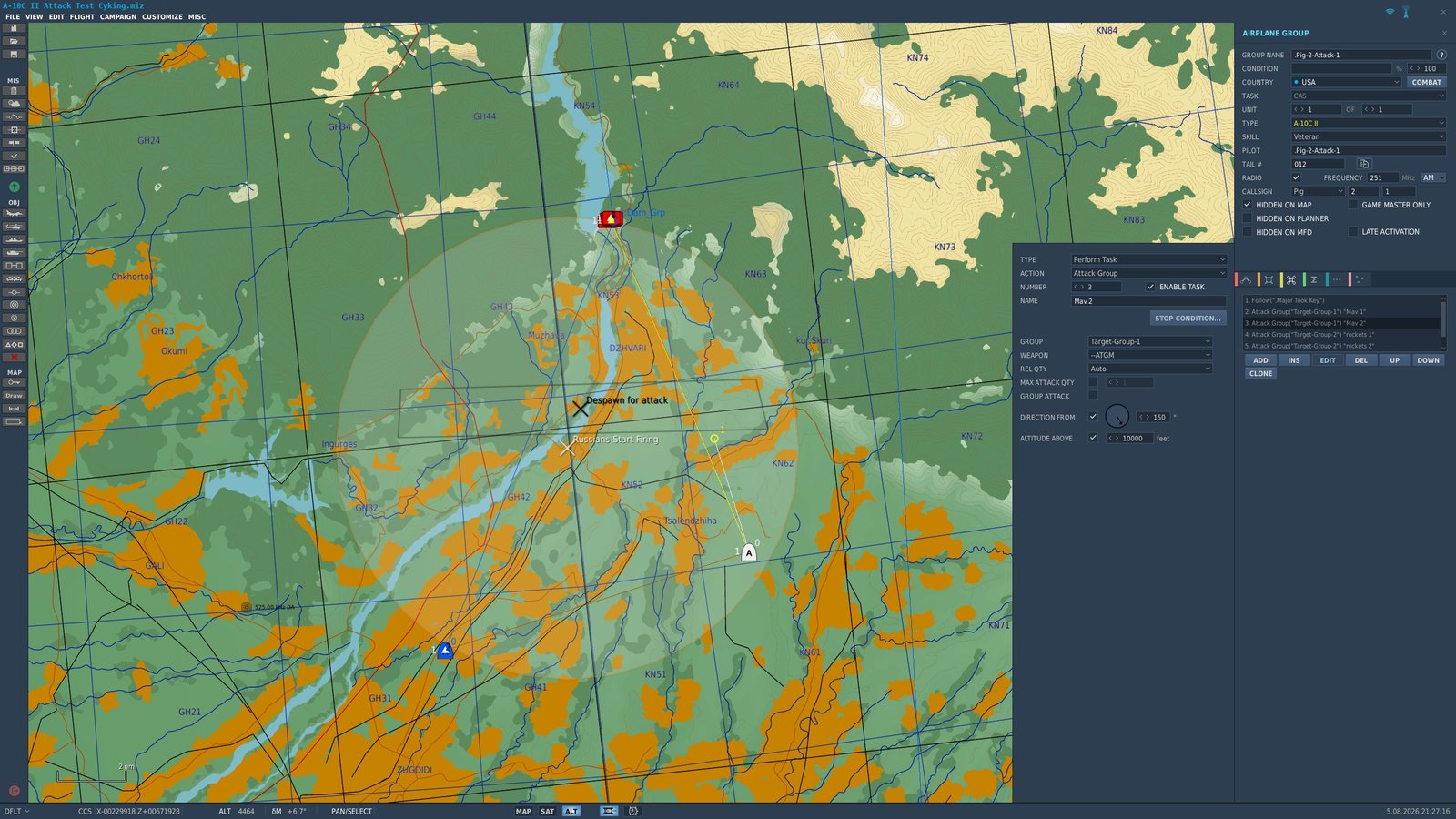
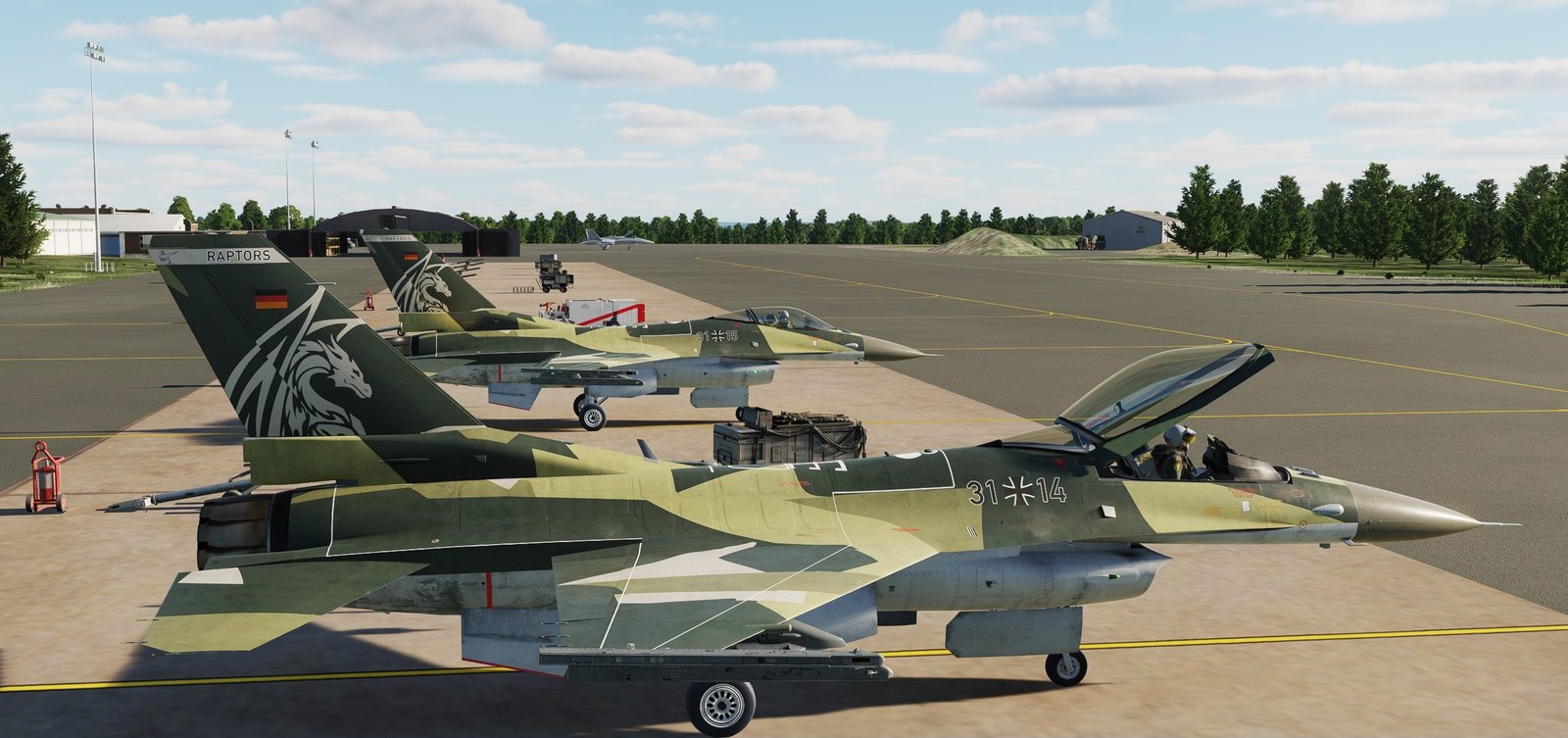
I enjoy DCS on many different levels. Sometimes I spend more time in the Mission Editor than in the cockpit. Sometimes I fly single-player campaigns, sometimes multiplayer. Over the years I have tried most DCS modules at least to some degree, with the F-16 being one of the aircraft I feel most comfortable in. I have also spent a lot of time on Cold War and World War II PvP servers, and today I regularly fly with a virtual squadron, vJaBoG32. On top of that, I am a big fan of BFM and always enjoy a good dogfight.
Flying Cyking is about combining aviation, history, storytelling, and mission design into immersive DCS World experiences.
The approach
Mission Design Philosophy
My campaigns are best described as semi-realistic. I try to find a careful balance between realism and gameplay, because while a three-hour sortie may be realistic, it is not always the most attractive experience from a player’s perspective. My goal is to create missions that feel believable, grounded, and authentic, while still respecting the player’s time and keeping the experience engaging from start to finish.
I usually build my missions around real procedures, plausible scenarios, detailed briefings, radio communication, supporting units, and historical context. At the same time, I am not afraid to make compromises where gameplay, pacing, storytelling, or the limits of DCS require them. For me, DCS is still a combat simulator, and once a player has a reasonable understanding of an aircraft, I want to give them meaningful opportunities to use it, complete objectives, and feel like they are part of a larger operation.
When I fly a single-player mission myself, pure realism is not always the most important thing to me. I want to be entertained during the time I spend in that mission. I want radio calls, atmosphere, a strong briefing, a story that pulls me in, and a world that feels alive rather than just an empty map with targets on it. That is exactly what I try to create with Flying Cyking campaigns.
Not every player wants the same thing, and that is perfectly fine. Some prefer the most realistic procedures possible, while others mainly want an immersive and memorable combat flight experience. My goal is to sit somewhere in the middle: realistic enough to feel believable, accessible enough to be enjoyable, and cinematic enough to make the player remember the mission after landing.
DCS can have a steep learning curve, and I want my missions to reward players who have taken the time to understand an aircraft without demanding perfection from them. I try to give players a believable structure, clear tasks, and enough freedom to experience the aircraft in action. Procedures, realism, and historical inspiration matter, but they should support the mission experience, not get in the way of it.
In the end, my mission design philosophy is simple: create campaigns that feel immersive, atmospheric, and grounded, while still being enjoyable to actually play.